
Entry in Car Insurance Discounts for Seniors
State Laws on Mature Driver Discounts: Mandatory vs Voluntary Savings
Find out which states legally mandate auto insurance discounts for mature-driver accident prevention courses, and how rules differ in Texas and Florida.

By Margaret Hale · Editor
Published
Answer in brief
While many auto insurers advertise discounts for older drivers who complete accident prevention courses, state laws vary dramatically on whether these savings are legally mandated. In Florida, state statute requires insurers to grant a three-year discount on liability, collision, and personal injury protection for drivers 55 and older who pass an approved course. Conversely, regulators in states like Texas clarify that no statute mandates auto insurance discounts, leaving eligibility, terms, and rate reductions entirely to individual insurance companies.
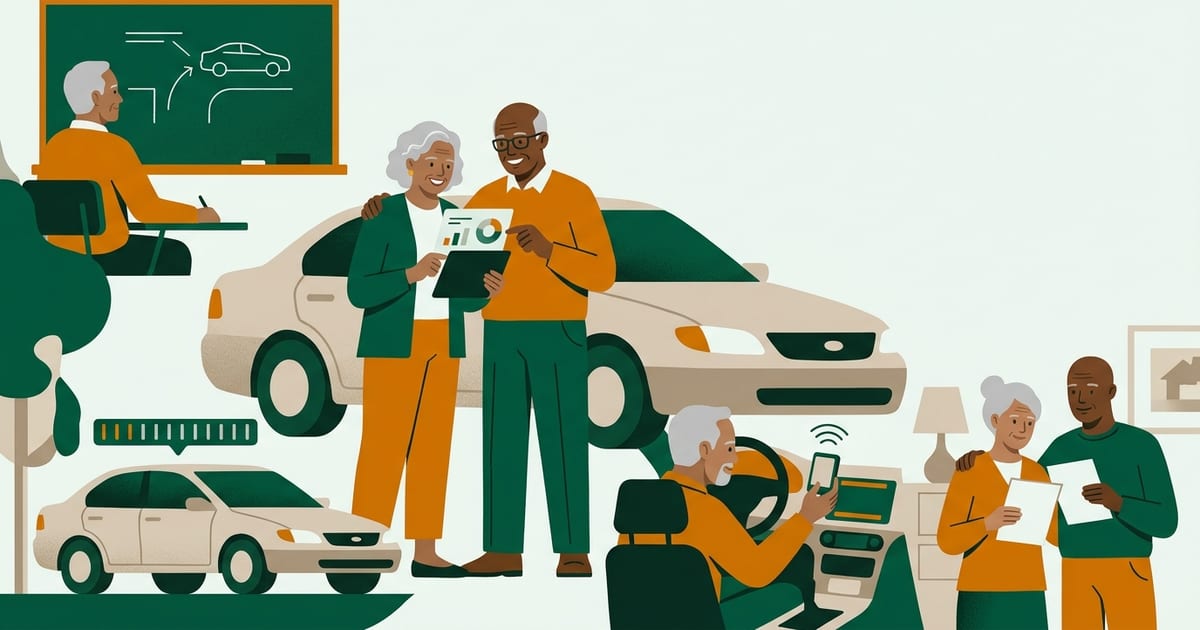
Mandated vs Discretionary Mature Driver Discounts
Older drivers searching for ways to reduce their auto insurance premium frequently encounter promotional materials highlighting mature-driver defensive driving discounts. However, whether an auto insurance company is legally required to provide a discount—or simply offers one voluntarily as a marketing incentive—depends entirely on state law and administrative insurance regulations.
According to research published by the Insurance Information Institute, most insurance carriers offer premium discounts to drivers age 55 and older, frequently linking eligibility to the successful completion of an approved driver improvement or accident-prevention course. Even so, the specific coverages discounted, the reduction percentages, and the duration of those savings vary significantly based on whether a state has enacted statutory mandates or permits open rating flexibility.
| State / Jurisdiction | Statutory Mandate | Eligibility Age | Covered Policy Elements | Statutory Duration |
|---|---|---|---|---|
| Florida (Fla. Stat. § 627.0652) | Mandatory premium reduction by law | 55 and older (principal operator) | Liability, PIP, and collision | 3 years |
| Texas (Texas Dept of Insurance) | Voluntary only; no statutory requirement | Determined by insurer | Determined by insurer | Determined by insurer |
| California (Cal. Ins. Code § 1861.02) | Mandates Good Driver Discount (≥20%) | All qualifying licensed drivers | Entire qualifying policy rate | Ongoing based on driving record |
Florida's Statutory Framework for Senior Motorists
Florida provides one of the clearest examples of a state-mandated mature-driver insurance reduction. Under Florida Statutes § 627.0652, insurance rating plans for private passenger motor vehicle policies must provide an appropriate premium reduction for liability coverage, personal injury protection (PIP), and collision coverage when the principal operator of the vehicle is 55 years of age or older and has successfully completed an approved motor vehicle accident prevention course.
The Florida statute specifies that the premium reduction remains effective for a three-year period following course completion. However, the law also includes protective safeguards for insurers: an insurer may condition the ongoing discount on the driver maintaining an acceptable driving record. Specifically, the carrier may withhold or cancel the discount if the driver is involved in an at-fault crash or is convicted of a moving traffic violation during that three-year window.
The Voluntary Approach in Texas and Other Unregulated States
In sharp contrast to statutory mandate states, the Texas Department of Insurance explicitly advises consumers that no Texas law or regulatory rule requires insurance companies to offer auto insurance discounts for age, course completion, low mileage, or any other factor. In Texas, state regulators warn consumers that advertising claiming discounts are required by state law is inaccurate. Companies operating in voluntary environments are free to offer discounts to attract older drivers, but they determine the savings amounts, criteria, and expiration timelines independently.
Similarly, under California Insurance Code § 1861.02, auto insurance rates must be determined primarily by three mandatory factors: driving safety record, annual miles driven, and years of driving experience. California law also mandates that insurers offer a Good Driver Discount that must be at least 20 percent below the rate otherwise charged to drivers who meet clean-record statutory standards. While mature-driver course savings exist across various carriers, state core rating protections ensure that clean driving history and low mileage remain the primary levers for low rates.
How to Claim and Maximize Your Mature Driver Discount
- 1
Confirm State Course Approval
Verify with your state licensing agency or department of insurance that the course provider is formally certified before paying enrollment fees.
- 2
Submit Official Proof of Completion
Deliver your course completion certificate to your insurance agent or carrier portal. Discounts do not apply retroactively; they take effect upon receipt or on your next policy renewal.
- 3
Verify Applied Premium Reductions
Check your renewal policy declarations page to confirm the discount has been applied to bodily injury liability, property damage, collision, and personal injury protection where applicable.
- 4
Track the Three-Year Expiration Window
Under statutes like Florida's, course discounts expire precisely after 36 months. Mark your calendar to complete a refresher course before the policy period ends to avoid rate spikes.
Because discount amounts vary substantially between carriers even within the same state, older motorists should avoid assuming their current insurer offers the highest potential savings. Independent consumer research from the Insurance Information Institute indicates that shopping at least three independent quotes remains the single most reliable method for lowering auto insurance expenditures. When using a quote comparison tool, specify your course completion date to evaluate how carriers apply mature driver savings to your baseline quote.
Questions & answers
Does every state require insurers to offer a senior driver discount?
No. While states like Florida mandate through statute that insurers provide rate reductions on liability, PIP, and collision for drivers 55 and older who complete approved courses, other states like Texas have no laws requiring insurance companies to offer any discounts.
How long does a mature driver accident prevention discount last?
In states with statutory mandates such as Florida, the discount is legally required to remain in effect for three years, provided the driver maintains a clean record free of at-fault accidents and moving violations. Refresher courses must be completed every three years to renew the discount.
Can an insurer cancel my defensive driving discount before three years?
Yes. Statutory provisions commonly allow insurers to revoke or withhold the discount if the principal operator is convicted of a moving traffic violation or is involved in an at-fault motor vehicle crash during the three-year eligibility window.
Can I take an approved mature driver course online?
Most states that recognize or mandate mature-driver discounts permit drivers to complete approved courses either in a classroom setting or online through certified accident-prevention course providers.
Terms: Mature driver, Mature-driver (defensive-driving) course, Premium
Sources and references
Legal figures on this page (minimum limits, filing periods, statutory benefits) are checked against the primary law or the state insurance regulator listed below. Links and figures last verified Nov 2026.
- Fla. Stat. § 627.0652 — discount for completing an accident prevention course — Florida Senate, Fla. Stat. § 627.0652Primary lawRates for liability, PIP and collision must include a premium reduction when the principal operator is 55 or older and completes an approved course; effective three years; may be conditioned on no at-fault crash or moving violation.
- Insurance Code § 1861.02 — rating factors and Good Driver Discount — California Legislative Information, Cal. Ins. Code § 1861.02Primary lawRates must be determined by, in decreasing order of importance, driving safety record, annual miles driven and years of driving experience; optional factors may follow. Good Driver Discount policies must be at least 20% below the rate otherwise charged.
- Companies may offer auto insurance discounts. No law requires discounts. — Texas Department of Insurance (2025)State insurance regulatorNo Texas law or rule mandates auto insurance discounts (for age, low mileage or anything else) or puts a time limit on them; advertising that says otherwise is misleading.
- Background on: Older drivers — Insurance Information InstituteIndependent research2023 fatal-crash involvement per 100,000 licensed drivers: 15.44 (65–74), 16.63 (75+), 24.38 all ages; state licence-renewal rules for older drivers.
- Older drivers — Insurance Institute for Highway SafetyIndependent researchCrash involvement, fragility and licensing research for drivers 70+.
- Drivers in fatal motor vehicle crashes by age, 2023 — Insurance Information Institute (2025)Statistical dataFatal-crash involvement per 100,000 licensed drivers: 42.40 (16–20), 35.34 (21–24), 28.97 (25–34), 24.18 (35–44), 21.70 (45–54), 19.45 (55–64), 15.44 (65–74), 16.63 (75+).
- Senior driving safety and insurance tips — Insurance Information InstituteConsumer guidanceMost insurers offer discounts to drivers over 55, some tied to approved accident-prevention courses; per-mile fatality risk rises with age because of fragility.
- Nine ways to lower your auto insurance costs — Insurance Information InstituteConsumer guidanceShop at least three quotes; raising a deductible from $200 to $500 can cut collision/comprehensive cost 15–30%, $1,000 can save 40%+; drop physical damage on cars worth under 10× the premium; bundling, low-mileage and good-student discounts.
Practical guidance on this page is original editorial work. Cited sources support factual statements and do not endorse this site. Dollar ranges described as typical or illustrative are editorial estimates, not figures from these sources.